
Sprint Timing System for Athletes: Why Every Athlete Should Time Their Sprints
Speed is one of the few athletic qualities that matters in almost every sport you can name. A football player needs acceleration to hit a hole before it closes. A soccer player needs speed to beat a defender to the ball. A basketball player needs an explosive first step to create separation, and baseball and softball players need speed out of the box and around the bases. Even athletes in sports that are not usually thought of as speed sports can benefit from becoming faster and more explosive.
That is exactly why sprint training should not be reserved for track athletes alone, and it is why more coaches and parents are searching for the best sprint timer for speed training. Research increasingly supports sprint work as a tool for building far more than raw top end speed, and a growing number of home athletes now use a portable sprint timing system to track that progress the same way they track weight room numbers.
Why Sprint Training Matters for Every Sport
A 2023 systematic review and meta analysis published in the Journal of Strength and Conditioning Research examined 55 studies and found that sprint interval training produced moderate improvements in overall physical performance, with the largest gains showing up in anaerobic performance. A separate meta analysis on repeated sprint training pulled from 40 publications and more than 500 athletes and found improvements in 10 meter sprint time, 20 meter sprint time, repeated sprint ability, change of direction performance, vertical jump height, and VO2 max.
The takeaway is simple. Training to run faster helps athletes become more complete athletes across almost any sport. But there is a second half of that equation that gets overlooked far too often. You also need to measure it. If you are sprinting, pulling sleds, running hills, and doing acceleration drills, knowing exactly how fast you are running can completely change the quality of your training.
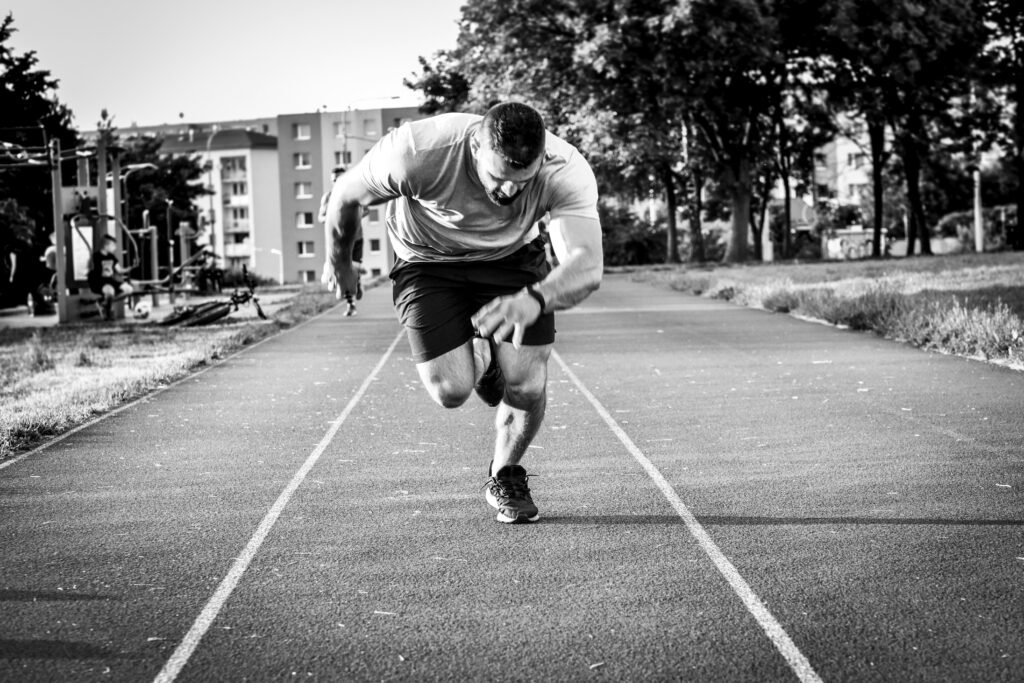
Four Sprint Exercises Every Athlete Should Know
Speed programs do not need to be complicated. A handful of sprint exercises can build acceleration, top end speed, and repeated sprint ability when performed with real intent.
1. Ten Yard Acceleration Sprints
Start from an athletic position and accelerate as aggressively as possible for ten yards, focusing on powerful first steps and driving into the ground. Timing this sprint gives you a benchmark for acceleration, and small improvements over several weeks signal real progress.
2. Twenty Yard Sprints
Twenty yard sprints extend the acceleration phase and apply to almost every field or court athlete. Measure every rep and allow enough recovery to maintain quality. If your times start dropping noticeably, extend your rest or wrap up the high speed portion of the workout.
3. Flying Tens
A flying ten separates acceleration from top end speed. Give yourself a 20 to 30 yard buildup before entering a timed ten yard zone at or near max velocity. A set of sprint timing gates for home use makes flying sprints useful because tiny differences are nearly impossible to catch with a stopwatch.
4. Resisted Sled Sprints
Attach a manageable amount of resistance and sprint 10 to 20 yards while keeping good mechanics. Research supports resisted sprint training for improving short distance acceleration, particularly around the 10 meter mark. Keep the focus on acceleration rather than simply loading the sled heavily.
You do not need a complicated program. A mix of acceleration sprints, flying sprints, and resisted work builds an effective speed program, and the important part is making every rep measurable.
Watch: A Quick Look at Timing Your Sprints
What Happens in Your Body When You Sprint
Running fast is a unique athletic stimulus. During an all out sprint, the body has to produce large amounts of force in a very short window of time, coordinating the hips, legs, feet, arms, and torso while rapidly driving into the ground. That combination of force, coordination, and speed is a big reason sprint training carries over so well into overall athletic performance.
In many sports, acceleration matters more than max speed, since athletes often only get a few yards to create separation. A 2024 systematic review and meta analysis covering 21 studies found that resisted sprint training produced significant improvements in 10 meter acceleration compared with normal sprint training. Sprinting is not only about getting faster either. A review of 18 studies found that short sprint interval training improved VO2 max along with both aerobic and anaerobic performance compared with no training at all, which matters for football, basketball, soccer, lacrosse, hockey, and any sport built around repeated bursts of effort.
Why You Should Time Every Sprint
There is a massive difference between saying I think I am getting faster and saying my 20 yard sprint improved from 3.21 to 3.08 seconds. The second statement gives you information you can act on, and it starts with using a sprint timing system for athletes rather than relying on feel alone.
Timing creates a true baseline. Record your 10 yard, 20 yard, 40 yard, and flying 10 times, then repeat those tests consistently to see whether your training is working. Timing also shows whether a single workout is still productive. If your first sprint runs 3.08 seconds and your fifth runs 3.19 seconds, that tells you something real. Your quality is dropping, and it may be time to rest longer or end the high speed portion of the session, rather than grinding out a set number of reps because a sheet of paper said so.
Hand timing is better than nothing, but a parent or training partner with a stopwatch introduces human reaction time on both ends, and when you are chasing improvements measured in hundredths of a second, that error becomes a real problem. That is why athletes searching for how to time a 40 yard dash accurately eventually land on electronic timing. Timing gates for sprinting were once reserved for pro facilities and universities. That has changed, and an affordable sprint timing system for home use now lets an athlete or parent electronically time runs and flying sprints without spending thousands of dollars.
What to Look for in a Home Sprint Timing System
If you are researching the best sprint timing system for home use, do not focus only on advertised accuracy. For an individual athlete, usability matters just as much. Look for five things: easy setup, since a system that takes 20 minutes to configure will eventually sit in a closet, solo operation, so you can train without needing someone else to run the equipment, consistent accuracy, so today’s number can be trusted against next month’s, split timing, so you can capture 10, 20, and 40 yard segments instead of a single finish time, and easy data tracking, so personal records and trends are simple to spot.
The best timer is not always the most expensive one. It is the one you will actually use every single workout.
Top 5 Sprint Timing Systems for Home Use
We weighted these rankings heavily toward real customer and user feedback, at roughly 40 percent, along with accuracy and reliability at 25 percent, ease of use at 20 percent, and price to value at 15 percent. We pulled from manufacturer reviews, Amazon and App Store ratings, sprint training communities such as Reddit and LetsRun, and retailer product data rather than leaning on a single source.
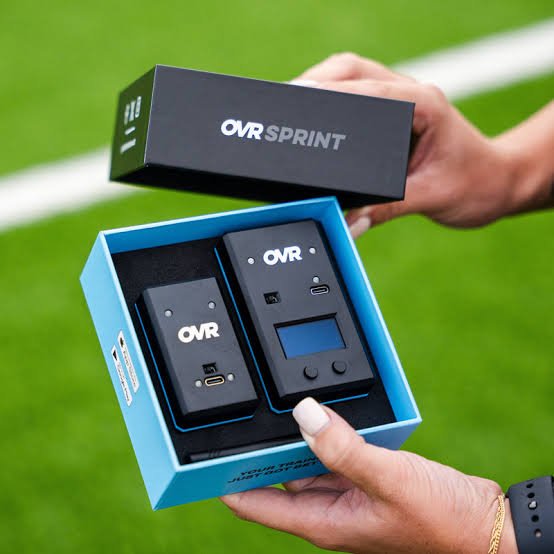
1. OVR Sprint
OVR strikes the best balance of professional style timing, price, and home user simplicity. Owner feedback is outstanding at 4.8 out of 5 across 229 reviews, and owners repeatedly mention simple setup, portability, and reliability.
Pros:
- Very easy setup with magnetic mounts and simple gate positioning.
- Excellent reliability and accuracy, with owners praising repeatable timing.
- Outstanding value, offering true timing gates for around $529 with no wearable required.
Cons:
- The companion app could use some refinement.
- Initial gate positioning has a small learning curve, especially for 40 yard timing.
- It has a shorter track record than Freelap, Brower, or Dashr.
Easy, fast, accurate, and surprisingly affordable is the recurring theme among owners. Home User Score: 9.5 out of 10.
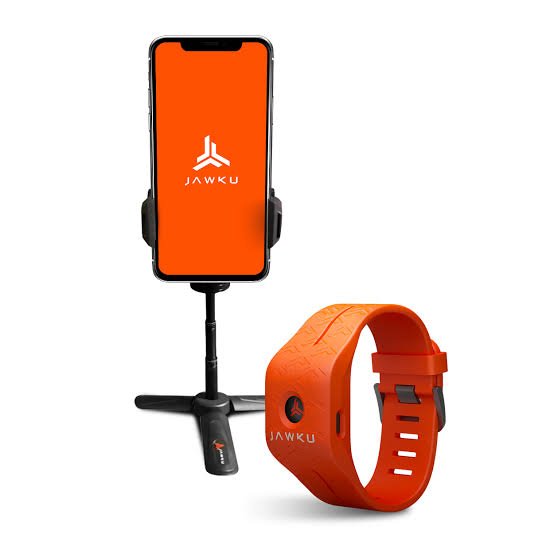
2. JAWKU Speed
At roughly $120 to $200, nothing else on this list competes with JAWKU on price. Its product listing shows 5 out of 5 across 58 reviews, while the larger App Store sample lands at 4.0 out of 5.
Pros:
- Excellent for training alone, since a phone and sensor make self timing extremely simple.
- Very inexpensive compared with true timing gates.
- Extremely portable, with almost nothing to set up or carry.
Cons:
- Missed runs are the biggest concern, with some owners reporting runs that fail to register.
- Performance depends on phone, app, and sensor connectivity.
- It is less flexible than multiple gates for detailed split testing.
It is incredibly convenient when it works, though reliability is not quite as bulletproof as a good timing gate. Home User Score: 9.1 out of 10.
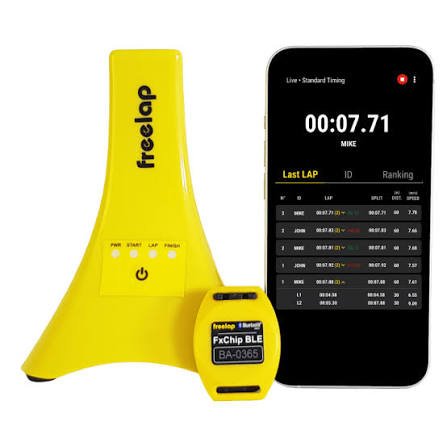
3. Freelap
Freelap carries one of the strongest reputations among serious sprinters in this group. It is tiny, portable, and especially well suited to athletes who train alone.
Pros:
- Fantastic for solo training, since you simply place the transmitters and run.
- Excellent portability, with far less hardware than laser gate setups.
- Great for splits and flying sprints, making it easy to track progress over time.
Cons:
- It is expensive relative to the amount of hardware included.
- Some accuracy criticism exists for very short splits, especially flying 10s.
- Transponder positioning matters, and occasional missed readings are reported.
It is extremely convenient and excellent for training, though questions about accuracy on very short splits keep coming up. Home User Score: 8.9 out of 10.
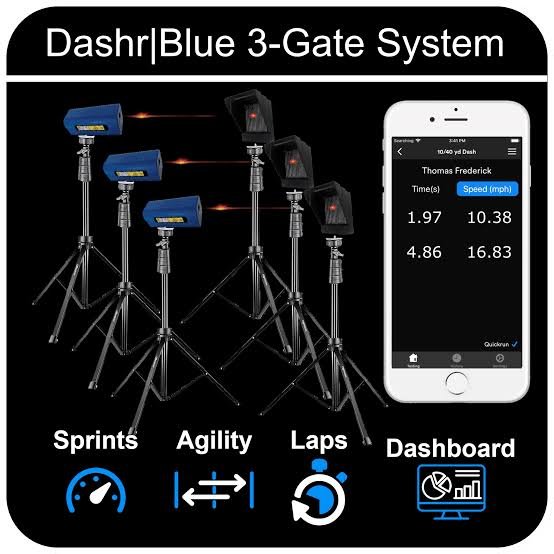
4. Dashr Blue
A single gate Dashr Blue system currently runs around $425, while a useful multi gate configuration costs considerably more, with a 3 gate Blue system landing around $990.
Pros:
- Very good accuracy and consistency across repeated tests.
- Extremely versatile, covering 40 yard dashes, flying sprints, agility, and splits.
- A proven system with years of real world coaching use behind it.
Cons:
- It requires more setup and alignment than OVR, Freelap, or JAWKU.
- App feedback is only mediocre, sitting around 3.5 out of 5.
- Cost increases quickly as additional gates are added.
It is accurate and proven, though OVR delivers a simpler overall experience for a home user. Home User Score: 8.6 out of 10.
5. Brower TCi
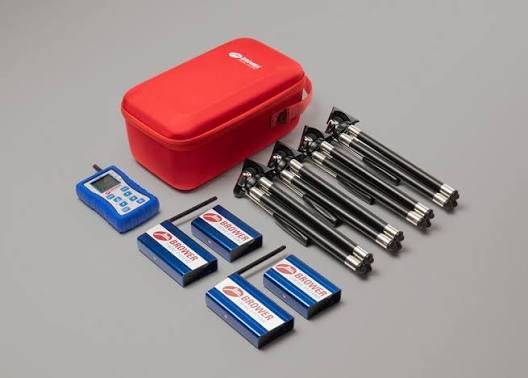
Brower earns its spot in the top five thanks to a reputation for accuracy, reliability, and professional use, though it lands at number five once we focus on individual home users.
Pros:
- Excellent accuracy and repeatability from a proven timing platform.
- Very reliable, well established timing technology.
- Strong starting and split timing options for serious testing.
Cons:
- A price above $1,500 is difficult to justify for a single athlete.
- It requires more equipment and setup than the other systems here.
- Most of its advantages benefit teams and coaches more than home users.
It is excellent equipment with a tougher value case for one athlete, but it remains the pick when accuracy matters more than price. Home User Score: 8.1 out of 10.
Final Thoughts
Sprint training can improve far more than a 40 yard dash time. Research links different forms of sprint work to gains in acceleration, repeated sprint ability, change of direction performance, jumping ability, aerobic fitness, and anaerobic performance, which makes speed training valuable for athletes across a huge range of sports.
But simply running sprint workouts is not enough on its own. Run with real intent, recover enough to produce high quality efforts, use exercises that target both acceleration and top end speed, and most importantly, time your sprints. Whether you choose an affordable home sprint timer, a wearable sensor, or a more advanced laser timing gate system, objective timing hands you something incredibly valuable: real feedback. Every sprint becomes a data point, every workout becomes measurable, and every personal record becomes proof that the work you are putting in is actually making you faster. Do not just train for speed. Measure it.