
Why Squats Matter: Athletic Performance, Longevity, and Speed
Why doing squats is the perfect excercise for all stages of your life
If you could only build a training program around a handful of exercises, the squat should sit near the top of the list.
Squatting is far more than a leg exercise. It develops the glutes, quadriceps, hamstrings, hips and trunk while teaching your body to produce force through one of the most fundamental movement patterns in everyday life. You squat every time you sit down, stand up or pick something up off the floor, and athletes rely on that same pattern when they sprint, jump and change direction. That makes squatting uniquely valuable for three goals at once: athletic performance, building healthy muscle mass and maintaining physical capability as you age.
For anyone building a home gym, that same logic makes a quality squat rack one of the best pieces of home gym equipment you can own, giving you a safe place to progressively load your squats while opening the door to bench presses, overhead presses and pull ups. Whether you want the best squat rack for a home gym, the best power rack for a home gym or the best squat rack for small spaces, the right rack becomes the anchor of everything you build around it.
Below, we break down why squatting deserves a permanent place in your training program, then walk through our Top 5 squat racks for a home gym so you can find the right setup for your space and budget.
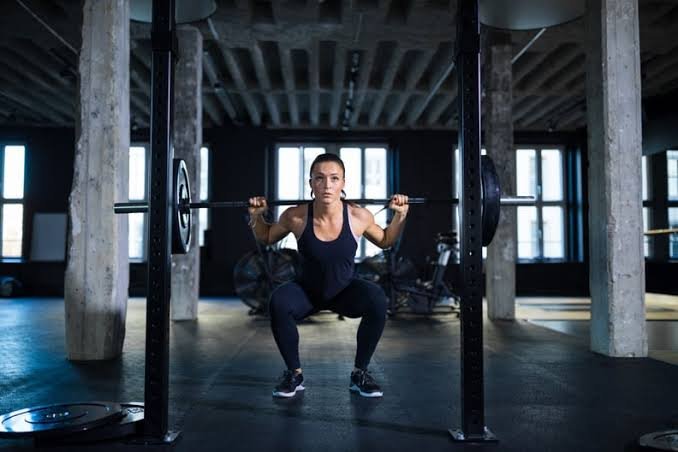
Squat Variations and When to Use Them
You do not have to perform the exact same squat every session. Different variations shift the emphasis, accommodate mobility differences and let you train toward different goals.
Back Squat: The classic barbell squat, and one of the best choices for total lower body strength since relatively heavy loads can be used safely.
Front Squat: Holding the bar across the front of the shoulders creates a more upright torso and places significant demand on the quadriceps, a favorite among athletes and Olympic style lifters.
Goblet Squat: Holding a single dumbbell or kettlebell in front of the body makes this an excellent variation for beginners, warm ups and higher rep conditioning work.
Box Squat: Squatting to a box creates a consistent depth target and is useful for learning positioning or emphasizing force production out of the bottom.
Pause Squat: Instead of rebounding out of the bottom, you pause before standing, forcing your muscles to generate force from a dead stop.
Jump Squat: Performed with bodyweight or a light load, jump squats shift the emphasis toward explosive power, connecting strength training directly to speed.
Most home gym users do not need to rotate through every variation. Choosing one primary squat pattern as your foundation and periodically cycling in a complementary variation is plenty for the vast majority of lifters.
Squatting, Longevity and Overall Health
The value of squatting grows even more important once the goal shifts from today’s workout to staying capable decades from now. One of the biggest challenges of aging is maintaining enough muscle and strength to keep performing everyday activities independently, and resistance training is among the most powerful tools for fighting that decline.
A 2022 systematic review and meta analysis found that people who performed any amount of resistance training had a 15 percent lower risk of all cause mortality, a 19 percent lower risk of cardiovascular disease mortality and a 14 percent lower risk of cancer mortality compared with people who performed none, with the greatest reduction, roughly 27 percent, around 60 minutes of resistance training per week. More recent research following 147,374 participants for up to 30 years found 90 to 119 minutes per week was linked to a 13 percent lower risk of all cause mortality and a 19 percent lower cardiovascular mortality risk.
Those studies looked at resistance training broadly, but the squat remains one of the most efficient ways to train the muscles responsible for standing up and moving your own body through the world. A review of 2,080 adults over age 70 with sarcopenia found that more than 10 weeks of resistance exercise significantly improved muscle strength, chair stand performance and skeletal muscle mass index. What does the chair stand test measure? Your ability to lower your body and stand back up. In other words, a squat.
Watch: How to Properly Squat Correctly
Performance Benefits of Squatting: What the Research Shows
Strength alone does not automatically make someone fast, explosive or athletic, but it creates the foundation everything else is built on.
A major meta analysis examined 15 studies, 510 subjects and 85 effect sizes to determine whether improvements in squat strength transferred to sprint performance. The relationship was substantial: researchers reported a very large correlation of r equals negative 0.77 between squat strength gains and sprint improvement. See the squat strength and sprint meta analysis on PubMed for the full breakdown.
A separate study of 492 elite youth soccer players found that relative squat strength explained roughly 45 to 53 percent of the variance in squat jump, countermovement jump and sprint performance across the sample. The full results are available in the 492 athlete squat study on PubMed.
A 2025 review of squat training, jump training and their combination in team sport athletes also concluded these methods improve jumping and sprinting performance. None of this means chasing the heaviest squat possible: relative strength, technique and training age all matter. The real objective is developing enough strength that force production is no longer your limiting factor.
The Speed Impact of Squatting
Speed comes down to producing large amounts of force in very short windows of time, since every ground contact happens in a fraction of a second. That is why an effective speed program covers both ends of the spectrum: heavy strength training to increase force producing capacity, plus explosive movements that teach your body to express that force quickly.
One randomized study offers a great example. Twenty well trained male athletes completed 12 weighted jump squat sessions over six weeks at roughly 30 percent of their squat one repetition maximum. Afterward, 20 meter sprint times improved by approximately 9.2 to 9.4 percent, countermovement jump height by roughly 4.9 to 6.4 percent and back squat strength by a similar margin. Full details are in the weighted jump squat study on PubMed.
That does not guarantee a 9 percent sprint improvement for everyone, it was a small study, but it shows a real connection between loaded, explosive squatting and gains in sprint and jump performance. A 2025 network meta analysis of 17 studies and 394 participants similarly found weight based strength training ranked highest for improving sprint performance. If speed matters to you, think of squatting and sprinting as complementary: build the engine with strength, then teach it to operate quickly with sprinting and jumping.
Top 5 Home Squat Racks for Your Garage
Once you are ready to train at home, the equipment you choose matters. We combined typical pricing, aggregated owner reviews and real world durability to rank the best squat racks for a home gym, from premium builds to the best budget squat rack on the market. Whether you want the best squat racks for the money or the best squat rack under $1,000, there is an option below for your space and budget.
1. REP PR-4000, Best Overall
Our number one overall pick does almost everything well without ultra premium pricing. Built from 3×3 inch, 11 gauge steel with Westside spacing and a 1,000 lb rackable capacity, it carries a 4.9 out of 5 rating across 671 reviews, with 99 percent of owners saying they would recommend it.
Pros:
- Extremely solid, tank like construction.
- Excellent customization with a huge attachment ecosystem.
- Great size to function ratio with a 30 inch depth that does not dominate a garage.
Cons:
- The starting price can climb to $1,200 to $2,000 or more once attachments are added.
- Occasional shipping cosmetics like scratches or powder coat damage.
- Assembly takes real time.
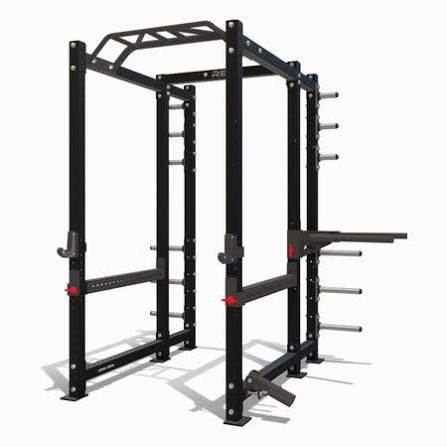
2. Rogue RML-390F Flat Foot, Best Build Quality
If construction quality matters more than price, this is the rack to choose. Made in the USA from 3×3 inch, 11 gauge uprights, it weighs 295 lb and fits a 48 by 49 inch footprint, and its flat foot design means no drilling into your floor. Rogue holds an outstanding 4.9 out of 5 rating across 443 reviews.
Pros:
- Exceptional build quality, with owners repeatedly praising the steel, welds and powder coating.
- Extremely stable without anchoring.
- An excellent long term platform with a massive attachment ecosystem.
Cons:
- A real premium price compared with Titan or REP.
- Attachments carry a premium price tag too.
- Setup is heavy and a second person helps.
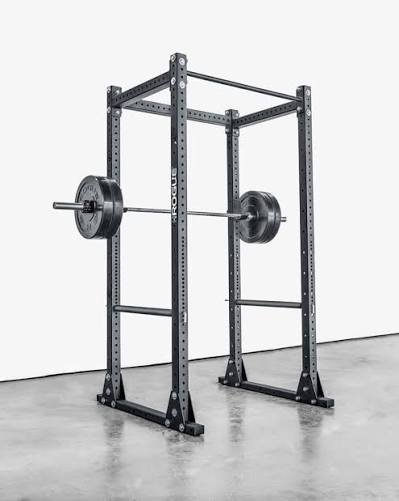
3. Titan X-3 Flat Foot, Best Value
The X-3 is arguably the value winner of this comparison. You get 3×3 inch, 11 gauge steel, Westside hole spacing and a stated 1,650 lb rackable capacity in a flat foot design for roughly $720, putting it much closer to the PR-4000 and Rogue in construction quality than its price suggests.
Pros:
- An outstanding price to build quality ratio.
- Very stable thanks to its flat foot design.
- A strong and growing attachment ecosystem.
Cons:
- Fit and finish trail Rogue and REP.
- Shipping damage and packaging complaints show up more often.
- Customer service draws more mixed feedback.
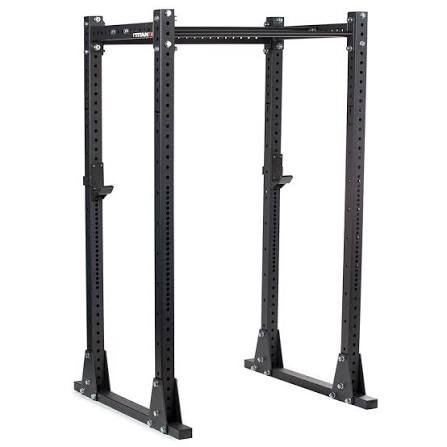
4. Bells of Steel Hydra, Best for Customization
The Hydra is built for anyone thinking beyond a simple squat rack toward a complete modular strength system. It is a 3×3 inch, 11 gauge rack with a 1,000 lb capacity and unusually strong configuration flexibility, including 72, 84, 90 or 108 inch height options. Owner feedback sits around a strong 4.8 out of 5.
Pros:
- Extremely customizable, with height, depth, safeties and attachments all adjustable.
- Very sturdy, with strong welds and powder coating.
- Cross brand compatibility from standardized dimensions.
Cons:
- Price adds up quickly once fully equipped.
- A more complicated buying and setup process.
- Some attachments draw more criticism than the rack itself.
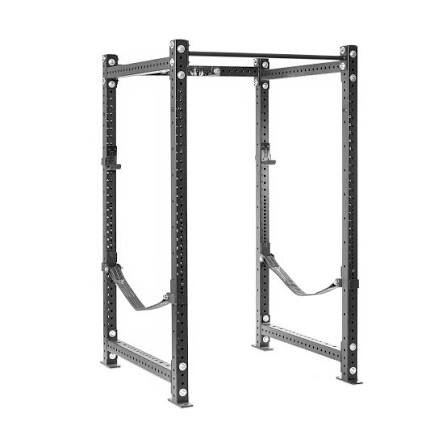
Typical Price: $1,100.00+
5. REP PR-1100, Best Budget Rack
At roughly $380, this rack makes you question how much the average home user really needs to spend. It skips the 3×3 inch, 11 gauge construction of the first four racks, but still delivers a 700 lb capacity, a full cage, safeties and J cups. Owner satisfaction remains extremely high at 4.9 out of 5 across 423 reviews, making it the best budget squat rack on our list and a genuine contender for best squat rack under $1,000.
Pros:
- Excellent value, the standout reason owners choose it.
- Plenty strong for most home users at a 700 lb capacity.
- Relatively easy, lightweight assembly.
Cons:
- 14 gauge construction, a step below the 11 gauge racks above.
- Less precise adjustment than Westside spacing.
- A more limited upgrade ecosystem.
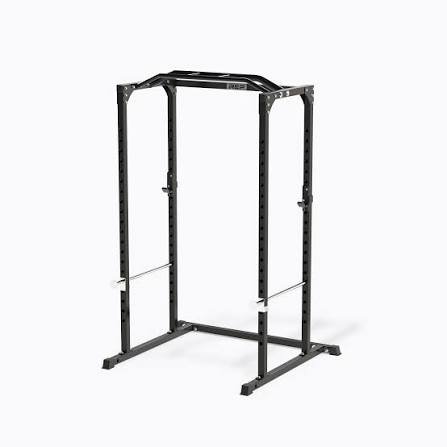
Typical Price: $379.99
Squatting Is an Investment in Your Future
The reason the squat remains one of the foundations of strength and athletic training is simple: it develops qualities that matter almost everywhere else. Get stronger and you create more potential to sprint faster, jump higher and produce more force, build and preserve lean muscle, and keep everyday movements like standing up and climbing stairs easier as you age.
You do not need to be a competitive powerlifter, and you do not need a 500 pound squat. You need the ability to progressively challenge your body and stay consistent. For many people, a simple garage gym removes the biggest obstacle to consistency: the rack is always there, with no commute and no waiting for equipment.
If you are trying to decide what is the best squat rack for a home gym, our overall recommendation is the REP PR-4000. If premium construction is the priority, choose the Rogue RML-390F. If value matters most, the Titan X-3 is difficult to ignore. If you want maximum customization, look at the Bells of Steel Hydra. And if you simply want a dependable rack without spending a fortune, the REP PR-1100 proves a great home squat setup does not have to be expensive.
The important part is not owning the most expensive rack. It is having a rack you will actually use, getting underneath the bar consistently and continuing to build strength for the athlete you are today and the person you want to be decades from now.